
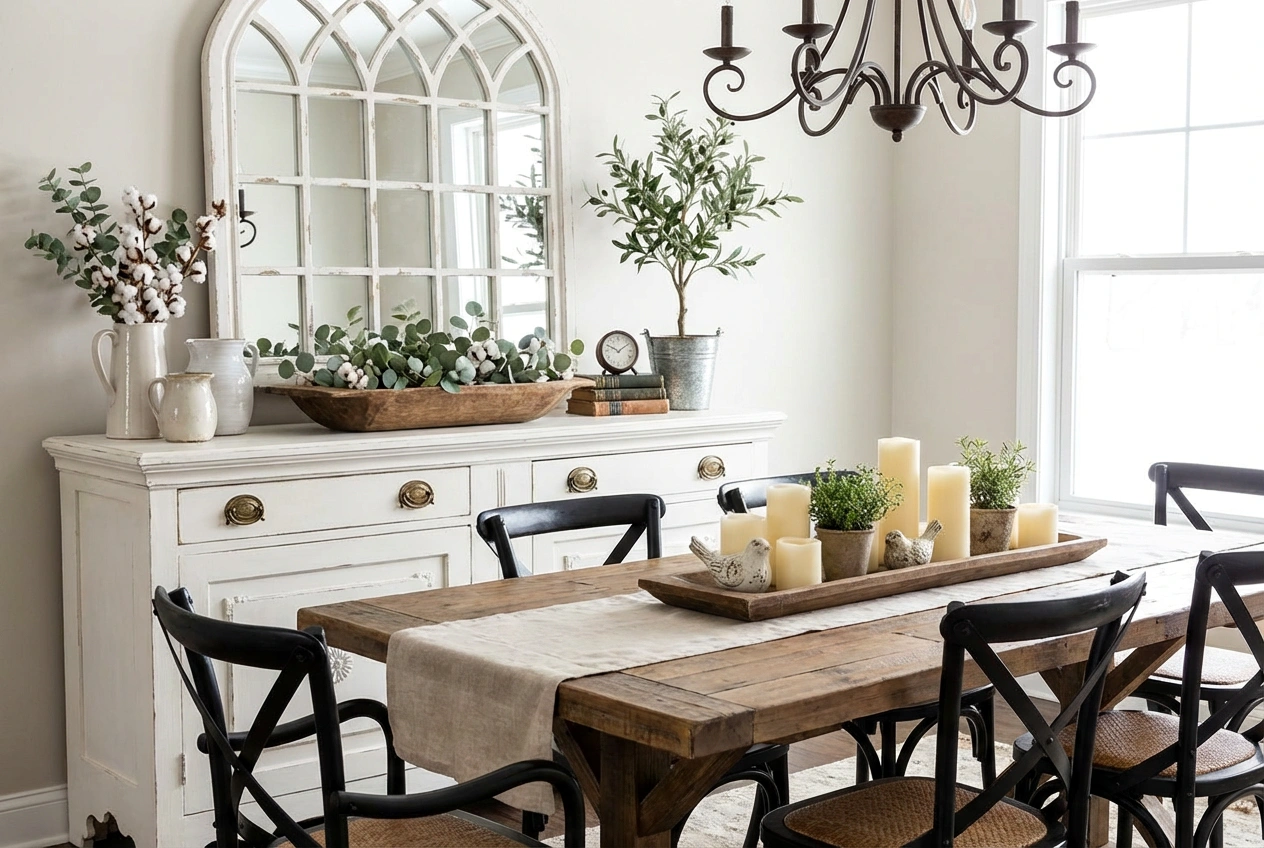
Transform Your Traditional Home: 5 Steps for Farmhouse Dining Room Side Table Decor
Introduction to Transform Your Traditional Home: 5 Steps for Farmhouse Dining Room Side Table Decor
Imagine the heart of your home, the dining room, infused with a sense of warmth, history, and effortless charm. This is the magic of farmhouse style—a design philosophy that masterfully blends rustic simplicity with cozy comfort. While grand gestures like a farmhouse table or a statement light fixture often take center stage, the true soul of this aesthetic is often found in the curated details. Specifically, the art of dining room side table decor can transform a functional piece of furniture into a captivating vignette that tells a story. This often-overlooked surface is your canvas for creating atmosphere, displaying cherished collections, and adding layers of texture that make a room feel lived-in and loved.
Transitioning a traditional dining space into a farmhouse haven doesn’t require a full-scale renovation. Instead, it’s about intentional styling that prioritizes authenticity and warmth. The farmhouse look celebrates natural materials, muted color palettes, and items with a sense of purpose or history. By focusing on your sideboard, console, or accent table styling, you can inject this character without overwhelming the space. This guide will walk you through five foundational steps to master this art, helping you create a dining room that feels both timeless and uniquely yours. Ultimately, a well-styled side table acts as a visual anchor, enhancing the room’s functionality while radiating the inviting, unpretentious spirit that defines farmhouse design.
Why Choose Farmhouse Style for Your Dining Room Side Table Decor?
Choosing farmhouse styling for your dining room accents is about more than following a trend; it’s about cultivating a feeling. This approach is particularly effective for several compelling reasons. First and foremost, it creates an atmosphere of unparalleled comfort and welcome. The use of soft linens, weathered wood, and organic shapes naturally lowers the visual “temperature” of a room, making it feel like a sanctuary. Consequently, your dining area becomes a place where guests immediately feel at ease, and family meals are savored.
Furthermore, farmhouse decor is inherently versatile and forgiving. Unlike more rigid modern styles, it embraces imperfection. A chipped pitcher, a book with a worn spine, or a table with visible grain and knots aren’t flaws—they’re assets that add depth and narrative. This makes it an excellent choice for real-life living, especially for families, as it doesn’t demand clinical perfection. Additionally, the focus on natural materials and a neutral base palette promotes visual harmony. Your dining room console decor won’t clash with other elements; instead, it will weave together textures and tones to create a cohesive, balanced look.
Finally, this style is deeply personal. It encourages you to display items with meaning—heirloom crockery, a vase from a memorable trip, or handmade ceramics. Therefore, your side table styling becomes a reflection of your story. It stands out because it feels authentic and collected-over-time rather than bought in a single shopping trip. This emotional connection transforms your dining room from a mere eating area into the soulful core of your home.
Key Elements & Design Components
Essential Decor Items for Farmhouse Dining Room Side Table Decor
Achieving the perfect farmhouse vignette relies on a mix of foundational items. Each piece should contribute texture, function, or a touch of rustic charm.
- The Table Itself: Opt for pieces in reclaimed wood, oak, pine, or with a chippy painted finish (think cream, sage, or charcoal). Look for turned legs, simple plank construction, or industrial-metal bases. A dining room accent table with character is your starting point.
- Textiles for Softness: Layer in texture with linen or cotton runners, napkins, or small tea towels. These add a soft, tactile element that contrasts beautifully with hard surfaces.
- Organic Elements: This is non-negotiable. Incorporate wood (bowls, cutting boards), woven materials (rattan trays, seagrass baskets), stone (marble coasters, concrete planters), and forged metals (iron, pewter).
- Botanical Life: Fresh or dried greenery is vital. Eucalyptus, olive branches, or a simple pitcher of garden clippings bring life and a soft, natural shape. Dried wheat or pampas grass adds height and rustic texture.
- Functional & Decorative Accessories: Think of items that are both useful and beautiful. This includes ceramic pitchers or jugs, stoneware bowls, wooden dough boards, and vintage-inspired glassware. A stack of hardcover books (cookbooks, gardening guides) adds height and intellectual charm.
- Lighting Elements: A small table lamp with a burlap or ceramic base, or a cluster of pillar candles in varying heights on a tray, introduces essential ambient lighting and cozy warmth.
- Personal Artifacts: Finally, sprinkle in personal touches: a framed vintage photo, a collection of ironstone plates propped against the wall, or a unique find from a flea market.
Style Variations & Budget-Friendly Alternatives
The beauty of farmhouse sideboard styling is its adaptability. For a Modern Farmhouse twist, pair your rustic wood with sleek black metal accents, graphic black-and-white prints, and simpler, more geometric shapes. If you lean toward French Country, introduce toile patterns, lavender stems, and chalky painted furniture with ornate curves.
For those on a budget or in rental spaces, creativity is key. Firstly, instead of buying a new table, scour second-hand stores or online marketplaces for a solid wood piece and give it a DIY makeover with chalk paint and sanding for a distressed look. Secondly, use removable wallpaper or a large, framed fabric panel as a backdrop for your console table decor instead of costly wall treatments. Thirdly, forage for branches and greenery from your yard instead of buying floral arrangements. Furthermore, repurpose items you already own: a ceramic mixing bowl becomes a fruit holder, and a stack of your favorite novels adds instant personality. Ultimately, the goal is to mix a few intentional new pieces with thoughtfully curated existing items.
How to Achieve the Look: Step-by-Step Styling Guide
Follow these five steps to build a beautifully layered and balanced farmhouse side table display.
Step 1: Establish Your Foundation and Layout
Begin by clearing your table completely. Consider its placement and the wall behind it. Will your decor be viewed from all sides, or is it against a wall? This determines a 360-degree or a backed layout. Next, lay down a foundational textile, like a linen runner or a placemat, to define the space and add your first layer of texture. If your table is small, a single, off-center mat can be more effective than a full runner.
Step 2: Anchor with a Focal Point
Every great vignette needs a star. Choose one substantial item to serve as your anchor. This could be a large wooden dough bowl filled with seasonal fruit, a statement lamp, a tall vase with a branch arrangement, or a piece of leaning art or a mirror on the wall above. Place this item slightly off-center (following the rule of thirds) to create visual interest. This anchor gives the eye a place to land and sets the scale for everything else.
Step 3: Build Height and Layers
Now, create visual depth by playing with height. Place your tallest item (the anchor) first. Then, add medium-height items like a stack of hardcover books (perfect for elevating smaller objects), a medium-sized ceramic pitcher, or a small wooden crate turned on its side. Finally, incorporate lower items like small bowls, candles, or a stack of plates. This tiered effect prevents the arrangement from looking flat and monotonous.
Step 4: Apply the Rule of Three and Group Objects
Farmhouse style feels curated, not cluttered. Group items in odd numbers, particularly threes, which are more pleasing to the eye. For example, create a cluster with a lantern (on top of two books), a small potted succulent, and a stoneware mug. Group similar materials together, like all wood items or all ceramic pieces, to create mini-collections within the larger display. Remember to leave intentional negative space; not every square inch needs to be filled.
Step 5: Infuse Life and Personal Character
This is the step that makes the display yours. Add your botanical element—a sprig of eucalyptus in a simple bottle, a potted herb, or a bundle of dried lavender. Then, incorporate the personal touches: the vintage salt cellar from your grandmother, the seashell from your beach vacation, or the hand-thrown mug from a local artisan. These are the items that spark conversation and inject soul into your dining room side table decor.
Elevating the Look: Advanced Styling Tips
Once your base arrangement is set, these advanced tips will polish the look to perfection. Firstly, always consider lighting. The quality of light changes your decor’s mood. Ensure your table lamp offers a warm, soft glow for evening ambiance. Similarly, you can string fairy lights inside a glass cloche or lantern for a magical twinkle. Secondly, don’t neglect the vertical space. The wall above your console is prime real estate. Hang a sunburst mirror, a rustic wooden sign, a small gallery wall of botanical prints, or a floating shelf to extend your styling upward and create a more complete focal point.
Furthermore, think in terms of seasons. Your side table styling can be a dynamic part of your home. For autumn, swap summer greens for dried wheat and pumpkins. In winter, use pinecones, evergreen clippings, and neutral candles. This keeps the space feeling fresh and connected to the world outside. Lastly, edit ruthlessly. Sometimes the most powerful move is to remove one item. Step back and assess. If it feels busy or cluttered, take one piece away. The goal is a composition that feels effortless, balanced, and inviting, not overcrowded.
Maintenance & Care: Keeping Your Space Fresh
Maintaining your farmhouse dining room accent table decor is straightforward and ensures it always looks its best. Dust wooden and ceramic items regularly with a soft, dry cloth. For painted or distressed furniture, avoid harsh chemical cleaners; a slightly damp cloth is usually sufficient. To preserve dried botanicals, keep them out of direct sunlight and gently dust them with a hairdryer on a cool, low setting. For linen textiles, shake them out frequently and follow care labels for washing to maintain their soft, lived-in look.
To keep the display from becoming static, implement a simple refresh routine. Every month or season, take everything off the table. Dust the surface and each item. Then, rather than placing everything back identically, swap out one or two elements. Change the botanical display, rotate in a different piece of art from another room, or restyle a small object grouping. This minor reshuffle prevents visual boredom and allows you to enjoy different treasures throughout the year.
FAQs: Frequently Asked Questions About Farmhouse Dining Room Side Table Decor
Q: My dining room is very small. Can I still do farmhouse side table decor?
A: Absolutely! In fact, a small, well-styled table can add huge character without taking up floor space. Choose a narrow console or a wall-mounted shelf. Focus on a minimalist approach: one anchor item (like a single piece of art), one functional item (a small lamp or tray), and one natural element. Keep the color palette light and airy to enhance the feeling of space.
Q: How do I mix modern furniture with farmhouse decor?
A: This creates the popular Modern Farmhouse look. The key is balance. If your table is modern (e.g., glass and chrome), use farmhouse accessories to warm it up: a chunky wooden bowl, a linen runner, and rustic ceramics. Conversely, if your table is very rustic, add sleek, modern accessories like a geometric metal vase or a simple black picture frame to keep it feeling current.
Q: I’m on a tight budget. Where should I splurge and where should I save?
A: Splurge on one high-quality, timeless anchor piece that you truly love, such as a beautiful table lamp or a substantial wooden dough bowl. These items will last for years. Save on accessories by shopping thrift stores, DIYing (like painting a thrifted frame), using natural finds, and repurposing items you already own. A stack of books and a jar of foraged branches cost nothing but add immense style.
Q: My items look messy, not “curated.” What am I doing wrong?
A: This usually comes down to scale, grouping, and editing. Ensure you have a clear height variation. Group smaller related items together on a tray or stack of books to make them feel intentional instead of scattered. Most importantly, edit. Remove about 20% of what you have on the table. Often, less is more, and a few well-chosen pieces will look far more elegant than many competing items.